
Industrial Construction Along the Powers Boulevard Corridor
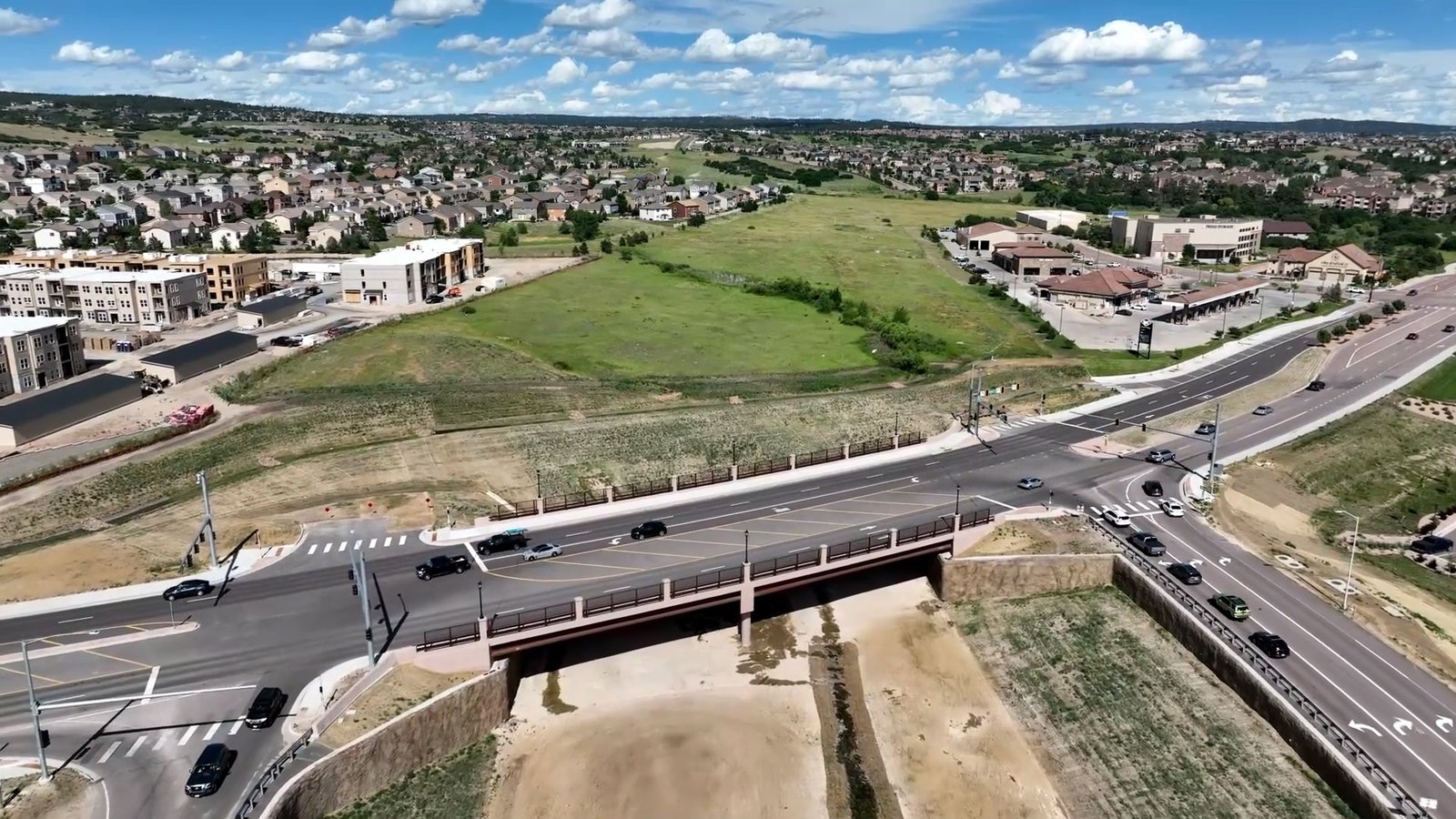
Twenty miles of expressway tie the southern edge of the metro to its far north side, and the buildings that line State Highway 21 are chosen for that reach. Powers Boulevard runs 20.245 miles from State Highway 16 (Mesa Ridge Parkway) in Fountain to State Highway 83 (Interquest Parkway) on the north side of Colorado Springs, bypassing the airport. It is a 55 mph expressway through eastern Colorado Springs and a 65 mph semi-freeway north of Dublin Boulevard. For a distribution or light industrial owner, that means a route that avoids the downtown interstate corridor.
We build to that advantage. We manage pad grading, truck court paving, tilt-wall and steel shell erection and the utilities that a distribution building needs, all with attention to how trucks enter and leave the site. The right driveway location, the right turn lanes and the right queue storage can matter more to a tenant than the last foot of clear height.
The corridor is not one market. The south end near Fountain, the airport stretch in the middle and the north end near InterQuest each have their own parcel sizes, utilities and neighbors. We help owners decide which segment suits the building, and then we plan the site around the interchange that will serve it.
Interchanges as Site Selectors
The highway has been built in stages, and each interchange tells a story about the land beside it. The Platte Avenue partial cloverleaf was finished in 2001, Woodmen Road in 2008, the Briargate Parkway and Union Boulevard split diamond in 2012 and the Old Ranch Road diamond in 2015. The Research Parkway diverging diamond opened fully on September 14, 2022, at an estimated cost of $42 million. Newer interchanges generally have capacity for additional commercial traffic, which is why they attract development.
Another diverging diamond, at Powers Boulevard and Airport Road, has been under construction since June 2024 and was expected to finish in 2026. Anyone planning a site near it, or at the north end near InterQuest, should confirm the current status with the state and the city, because work zones affect access and construction deliveries. We include the road schedule in every project plan for this corridor, and we point out when a parcel's best driveway sits in a future work area.
Operators Who Choose the Corridor
The users are mostly regional. Logistics and distribution operators want fast access to both ends of the metro. E-commerce fulfillment tenants want truck and parking capacity and a large labor draw. Light manufacturers and suppliers to the defense and aerospace supply chain want quiet buildings with flexible bays.
Each group asks for something different from a site. A fulfillment tenant wants many dock positions and a trailer storage yard. A supplier may want a small yard but a fenced perimeter, a secure receiving area and extra power. We ask about those details early, because they decide the parcel size and the building layout.
Shells, Courts and Parking for Large Fleets
We deliver warehouse shell construction in tilt-wall and steel frame, with slabs designed for racking loads and forklift traffic. Truck courts and dock aprons are reinforced concrete, built to resist the point loads from trailer landing gear, and sloped to drain away from the building.
Parking is the second major scope. Shift workers and delivery drivers arrive in waves, so we design the lot for peak flow and provide stabilized parking lots that handle trucks as well as cars. Lighting, striping and accessible routes are part of the same package.
A Realistic Calendar for a Corridor Building
A tilt-wall distribution building of average size moves through a sequence we know well: site grading, underground utilities, footings, slab, panel casting and erection, roof, and then dock equipment and paving. The long items are the electrical service and the structural components, so we order them first. On sites near new interchanges, permits for driveway access may be the real critical path.
Weather and altitude shape the sequence. We schedule earthwork in the dry months and set panels before the winter wind season. Concrete work after October is protected, and any paving that cannot be placed in cold weather is moved into the next spring, with a gravel base serving as a temporary surface.
Traffic Studies, Turn Lanes and Queue Space
Before design is complete, we review the traffic impact study with the civil engineer, because it may require turn lanes, a signal contribution or a restriction on left turns. These items change the site layout. A building that fits the lot on paper can lose its truck court to a deceleration lane.
We then design the on-site circulation so that no truck waits on the public road. Gate throats, scales, check-in lanes and trailer staging areas are sized for the tenant's peak. At the end, we test the layout with a turning-template check for the largest vehicle expected.
Where Corridor Costs Move
Costs in this corridor are driven by off-site improvements, utility extensions, pavement thickness and the size of the electrical service. A parcel near an existing interchange with utilities at the property line costs less to develop than a parcel that needs a long extension. Differences like these can outweigh the land price.
Our distribution center budgets list each item separately. We also compare steel and tilt-wall options, because the cheaper frame depends on height, span and local panel casting space. When the corridor is busy, subcontractor pricing for concrete and electrical can change with demand, and we advise clients to lock key quotes early.
Share the Parcel and the Truck Count
Send the parcel, the building size and the expected truck count. We will check access, utilities and road schedules and return a plan and a range.
Common Questions
Which part of the corridor is best for distribution?
It depends on the user. The airport stretch offers large parcels and a master-planned business park, and the area near the north end offers access to the I-25 connection at North Gate Boulevard, completed October 7, 2021. The southern end near Fountain offers larger sites at the edge of the metro. We compare parcels by utilities, access and cost before recommending one.
How do road projects along Powers affect a construction schedule?
They can change driveway locations, restrict deliveries and add traffic control requirements. The Airport Road interchange has been under construction since June 2024, and conditions near it may differ from those near the completed Research Parkway interchange. We review the state and city schedules and plan access accordingly.
Do I need a traffic study?
For most distribution or fulfillment buildings of any size, yes. The city or the state highway agency will want to see trip counts, truck volumes and the effect on nearby intersections. We coordinate the study with the civil engineer so its recommendations can be built into the site plan.
Is tilt-wall or steel better for a corridor building?
Tilt-wall is usually better for large, tall buildings with long runs of wall, and it offers durability and fire resistance. A steel frame can be faster and more flexible for smaller buildings or buildings that may need to expand. We give owners a side-by-side comparison for their specific building.