
Equipment Pads and Foundations in Colorado Springs
Cripple Creek sits at 9,456 feet, and the open-pit heap leach operation in Teller County processes ore there at an elevation where air is thin, nights freeze and equipment foundations carry the weight of machinery that never stops. That setting is a useful reminder of what an equipment pad has to survive. We build equipment pads and foundations for compressors, chillers, generators, process skids, presses, conveyors and tanks across the Colorado Springs metro and the Pikes Peak foothills.
A foundation is not a slab with a machine sitting on it. It is a mass, a mounting plane and a bolted tie-down system that must hold alignment while carrying static weight, dynamic loads and sometimes vibration. Rotating equipment introduces frequencies that the foundation must not amplify. Reciprocating compressors and large presses ask the soil, the concrete mass and the anchor bolts to behave together, and we build to the equipment manufacturer's foundation drawings and the engineer's design.
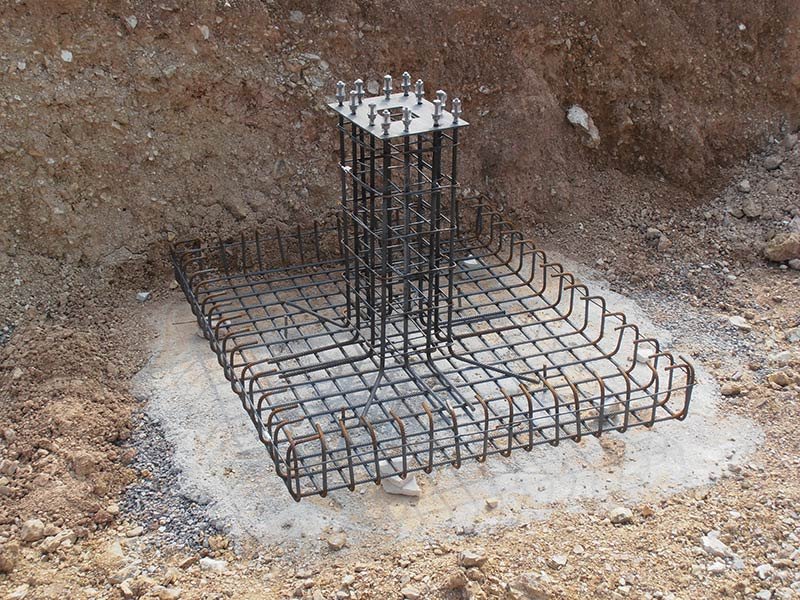
Equipment arrives on the manufacturer's schedule, not on the construction schedule. Anchor bolt templates, embedded plates, sleeves and grout details all have to be right before the pour, because moving a bolt after the concrete cures is difficult and sometimes impossible. We take the vendor drawings seriously and check them against the field before placing a yard of concrete.
Why Foundation Work Is Increasing Across the Region
Infrastructure investment in the metro is feeding equipment demand. The Colorado Springs Utilities and airport agreement for Peak Innovation Park describes a transmission framework of up to 600 megawatts and a new high-voltage substation, which implies transformers, switchgear and standby generation on foundations sized for heavy equipment. Teller County, with its mining operation and mountain communities, adds remote sites with their own constraints.
Owners in utilities and power and in data centers are common sources of this work, since their equipment is heavy, critical and unforgiving of settlement. Even routine plant expansions add rooftop and ground-level mechanical equipment that needs a proper base.
The Work We Manage Most Closely
Forming, reinforcing, embedding and placing concrete for foundations is our work, performed by crews who set anchor bolts to templates and check them with a total station. When excavation, forms and placement follow one coordinated plan, the bolt group stays where the drawings place it, and the elevation of the top of the pad matches the equipment datum.
We also excavate and prepare subgrade for pads, using engineered fill where the geotechnical report requires it. Grouting, base plate setting and leveling are coordinated with the equipment installer so the final connection is clean. Where a pad ties into the building floor, we coordinate it with industrial concrete floors so joints and isolations are consistent.
Pad Types and Their Details
Small equipment sits on thickened slabs with housekeeping pads. Mid-size equipment, such as chillers and generators, uses mat or pier-supported pads with anchor bolts and sleeves. Heavy and dynamic equipment, such as large compressors or presses, uses block foundations with mass proportioned to the machine, often isolated from the surrounding slab by joints and sometimes by vibration isolation material.
We also build tank rings, containment curbs, trench drains and sumps, equipment trenches and pipe supports. Containment is often the item that regulators and insurers look at hardest, so we detail it to the specification and test it before handoff.
Design Basis and Review
Equipment foundations are designed by a licensed engineer from the manufacturer's loads and the geotechnical report, and they are reviewed under the building department's structural provisions when they support equipment that is part of a permitted building or system. Colorado Springs, Fountain and Monument have adopted the 2023 Pikes Peak Regional Building Code, which carries the 2021 International Building Code, and the Pikes Peak Regional Building Department enforces it.
Seismic and wind anchorage for tall or exposed equipment is part of that design, and we install the anchorage exactly as detailed. If a manufacturer revises a bolt pattern after the pour has been scheduled, we stop and confirm the change with the engineer before placing.
Frost, Altitude and Access
Frost depth, freeze-thaw cycling and temperature swings affect pad design and construction in this region. Footings extend below frost depth, exterior pads are drained so water does not freeze under them and concrete is air-entrained and protected during placement. At higher elevations, such as Woodland Park at 8,481 feet, the placement window is shorter and the protection requirements are greater.
Access matters as well. Heavy equipment is delivered by crane and low-boy trailer, so the pad area needs a stable approach and a lift zone with outrigger support. We coordinate with the rigging contractor on crane locations and build the supporting base before the pad is poured, using stabilized laydown yards where staging space is needed.
Setting the Pad Ahead of the Equipment
The pad has to be cured, surveyed and accepted before the equipment arrives, and the equipment has to arrive when the crane and the rigging crew are booked. A pour that slips a week can push a delivery that cannot be rescheduled for a month, so we work backward from the set date. Concrete for heavy foundations gains strength on its own timeline, and we do not release a pad for setting until the test breaks or the maturity data say it is ready.
For equipment with long lead times, we ask for approved vendor drawings early, often before the building is under contract, and we carry a bolt layout in the plan set as a hold point. If the vendor changes the machine, the pad can still be adjusted before the pour. Afterward, the options narrow, and the cost grows.
What Sets the Price of a Foundation
Mass, depth and reinforcement determine most of the cost, and the equipment determines mass. A block foundation for a large compressor consumes far more concrete than a chiller pad, and a pad that needs piles beneath it adds a second trade. Anchor bolt assemblies, sleeves, embedded plates and grout are smaller items that still require accurate installation.
Site conditions add or remove cost. Remote sites such as those in the foothills carry added haul time for concrete, and cold-weather protection at altitude adds labor and materials. We list those items separately so you can see how location affects the number.
Send the Vendor Drawings Early
Share the equipment list and foundation drawings, and we will check bolt patterns, elevations and sequencing before any concrete is placed.
Common Questions
How do you make sure anchor bolts land in the right place?
We build a template from the vendor drawing, set the bolts with a survey instrument and check them again before and after the pour. The template is rigid and braced so concrete placement does not move it. Any discrepancy is reported to the engineer before the equipment is set.
Does the equipment manufacturer have to approve the foundation?
Most manufacturers provide foundation requirements and review the design for rotating or heavy equipment. We follow their drawings and coordinate submittals through the engineer. Their approval protects the warranty.
What about vibration?
Vibration-sensitive and vibration-producing equipment may need a separate block foundation with isolation from the building slab. The engineer defines mass and isolation, and we build it as drawn. Poor isolation is hard to fix after the fact.
Can pads be added to an existing facility without stopping production?
Often yes. We saw cut and break the slab in short sections, excavate, place and cure the new foundation and restore the floor. Work is scheduled around shifts and dust, noise and vibration are controlled.