
Heavy-Haul Access Roads for Colorado Springs Sites
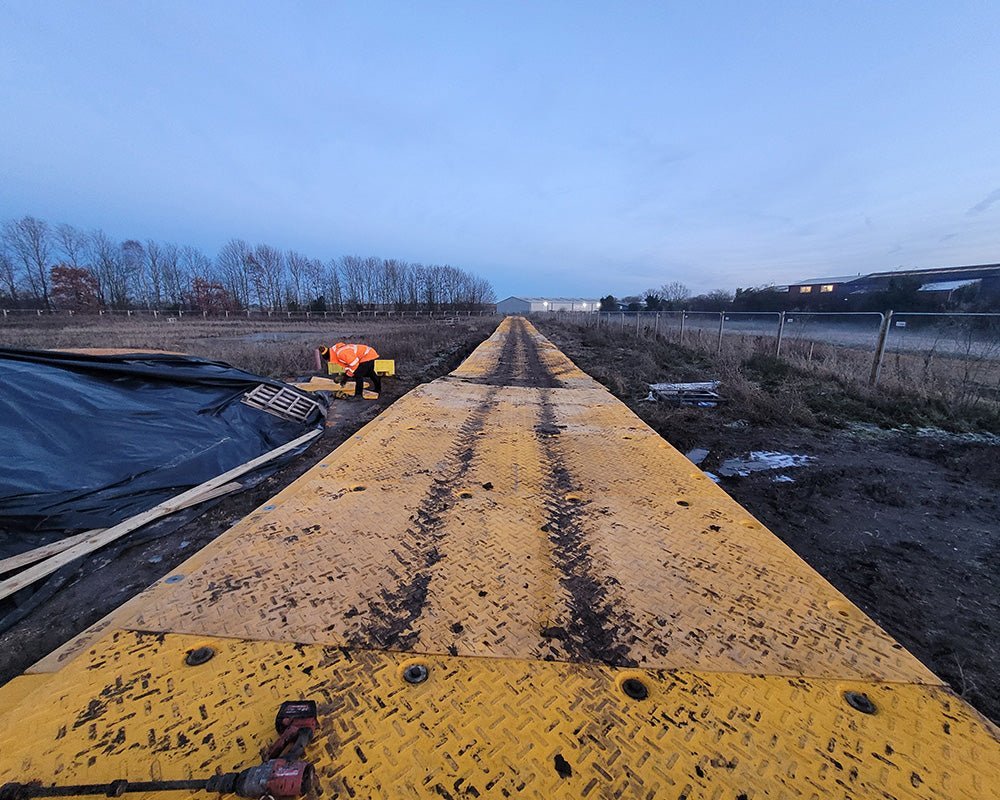
A 90-ton crane travelling to a pad, a flatbed carrying a transformer and a concrete truck backing into a footing all use the same road, and none of them forgives a section that was sized for pickup trucks. We build heavy-haul access roads that connect a public highway to an industrial site, carry the construction fleet through the build, and then continue as the permanent route for plant traffic.
The Colorado Springs metro offers several different haul conditions. Interstate 25 exit 132, which serves the Fort Carson entrance, connects to State Highway 21 and puts a plant south of the city within reach of the regional expressway system. U.S. Highway 24 runs through Calhan on its way from Colorado Springs to Limon, which gives eastern parcels a different approach from the I-25 corridor. We design access roads around the actual route the loads will take, and we verify turning paths at every public intersection before an oversize delivery is scheduled.
Work like this is often invisible once finished, which is the intent. A road that carries its design loads quietly, drains well and shows no rutting after the first winter has been built correctly. A road that needs patching every spring is a recurring cost the owner did not budget.
Scope: Alignment, Section, Drainage and Edges
We set the alignment from a survey and the design vehicle, not from the dirt road that happened to be there. The scope includes clearing, cut and fill, subgrade stabilization, aggregate base, paving or concrete, shoulders, culverts, ditches, signing and any intersection improvements required by the reviewing authority. Where the road crosses a drainage way, we size and build the crossing as part of the road.
Heavy loads punish edges and curves. We widen radii for long-wheelbase trailers, thicken the section where vehicles stop and start, and give shoulders enough strength that a truck dropping a wheel off the pavement does not break the edge. For roads that will see tracked equipment, we plan a protected crossing so the pavement is not cut.
Equipment and Crews We Put on the Road
Grading, aggregate placement, compaction and drainage structures are work we schedule and inspect closely, which matters on access roads because every hour of delay is an hour that heavy deliveries cannot arrive. When the earthwork and the base are controlled by one foreman, the compaction results are consistent from the first station to the last.
We coordinate directly with utility owners where the road crosses a line, and with the design engineer on subgrade correction. Proof-rolling and density testing are scheduled with the third-party testing firm in advance, and the results are shared as they are produced so the paving date does not slip on paperwork. Where a road leads to a laydown area, we tie the work to our stabilized laydown yards in one grading plan.
Creek Crossings, Bridges and Public Right of Way
Many industrial parcels in the metro sit near a creek, and Platte Avenue shows what the water does to infrastructure. A roughly $14 million project that began in November 2020 replaced the two Platte Avenue bridges over Sand Creek, built in 1956 and damaged by flooding in 2008, with one bridge between Wooten Road and the Powers Boulevard interchange. That history is a reminder to check flood exposure on any access route that crosses a drainage way, and to size culverts for the storm, not for the average day.
Public right of way adds its own steps: driveway permits, traffic control plans and sometimes turn lanes. We work these early with the reviewing authority so the haul route is approved before the first heavy delivery is booked. Related drainage design is detailed under our stormwater detention and drainage service.
Permitting an Access Road
An access road is permitted under municipal or county site development rules rather than the building code, and the requirements differ by jurisdiction. Colorado building codes are adopted city by city and county by county, so the same road can face a different submittal in Colorado Springs than it does in the unincorporated county. We confirm the correct agency, the required drawings and the inspection sequence before pricing is finalized.
Typical submittals include a grading and erosion control plan, a drainage report, a traffic or access study for larger sites, and a geotechnical pavement recommendation. We prepare the construction side of those documents and coordinate review comments with the owner's design team, so the permit does not become the critical path.
Sequencing the Road Ahead of the Big Lifts
The road has to be passable before the first crane arrives and durable by the time the last piece of equipment is set. We build a base-course road first, keep it in service through construction, and place the final wearing surface after the heavy loads are done so the new pavement is not damaged by the work that justified building it. That sequence saves repair and gives the owner a clean surface at opening.
Seasonal limits matter. Asphalt placement depends on temperature, and thaw can soften a base for weeks, so we avoid scheduling the heaviest hauls during spring breakup. When an oversize delivery cannot be moved, we offer a gravel haul lane with matting at the weak point instead of a postponement.
Where We Build Access Roads
We build access roads for sites throughout El Paso County and the Pikes Peak region, from the southern edge near Fort Carson to the northern approaches near Monument and Palmer Lake, and eastward along the U.S. 24 corridor. Industrial owners in metals and heavy industry are common clients for this work because their loads are heaviest and their routes least forgiving.
If your parcel lies outside the city limits, as many near Monument do, we will confirm access permits with the county and the correct fire district before design is complete.
Price an Access Road for Your Site
Give us the parcel, the design vehicle and the nearest public road, and we will return an alignment, a section and a cost.
Common Questions
What pavement section does a heavy-haul road need?
The section depends on the heaviest design load, the number of passes expected and the strength of the subgrade. A geotechnical report gives the recommended thickness, and we build to that recommendation or to a tested alternative. Roads that carry tracked equipment or very high axle loads often use concrete for its stiffness.
Can we use the same road for construction and for plant operations?
Yes, and that is usually the economical path. We build a base that carries construction traffic and place the final surface late. If the construction loads exceed the permanent design, we thicken the base or add a temporary haul surface so the permanent pavement is protected.
How do you handle oversize loads at public intersections?
We check turning paths with the design vehicle before the load is scheduled, widen corners if the plans allow it and coordinate traffic control with the reviewing authority. For truly oversize deliveries the carrier needs its own route permit, and we supply the site-side drawings.
What does it cost to extend a road to a remote parcel?
Distance, grade, drainage crossings and utility conflicts drive the number. A long road with one culvert costs far less than a short one with a creek crossing and a relocated line. We give a priced option for each alternative alignment at the start.
Will spring thaw damage a new road?
A properly drained base with a fresh wearing course handles thaw well, but a base without drainage does not. We build side ditches and subdrains where the geotechnical report suggests them, and we avoid placing the final surface over a wet subgrade.