
Long-Lead Procurement Management for Industrial Projects
A transformer ordered after the building permit is a transformer that arrives after the building is ready for it. On industrial jobs in the Colorado Springs metro, the items with the longest lead times, switchgear, transformers, generators, overhead cranes, dock equipment, process vessels and rooftop units, do not wait for construction drawings. They are specified, submitted, approved and released while the site is still being graded, and a job that handles this well is often weeks ahead of one that does not.
Our procurement management service runs that sequence for the owner. We build the long-lead register from the program, set release dates backward from the date each item is needed in the field, and manage submittals, approvals, shop drawings, factory inspections, freight and storage. Where a security requirement affects how equipment is delivered or where it may be stored, we plan it with your facility staff, including who may receive deliveries and what escort is required.
The register is first drafted during preconstruction, when a change in equipment choice still costs a conversation instead of a redesign.
Release dates work backward from the field
Every long-lead item has three dates that matter: the date the building needs it, the date the manufacturer needs an approved submittal, and the date the owner must commit the purchase. The gap between the first and the third is the manufacturer's lead time plus transit plus a buffer for rejected submittals. We lay the three dates for each item on one page and show the owner which decisions drive the critical path.
The utility's own equipment belongs on that page too. Colorado Springs Utilities and the airport signed an agreement on June 13, 2025 for infrastructure at Peak Innovation Park that includes a transmission framework of up to 600 megawatts and a new high-voltage substation. When a plant connects to an extension of that scale, the service date is set by the utility's schedule, and the customer's switchgear and transformers have to be timed to meet it, not to the building.
Standby power illustrates the point. A generator that must be tested under load before occupancy needs its fuel storage, transfer switch and permits delivered in the right order, and each has its own lead time and inspection. We chart those dependencies for every major system so an owner can see why a late decision on one item moves the date for three others.
What the register covers
The register opens with electrical gear and works down. We track utility-side equipment and metering, medium-voltage switchgear, transformers, standby generation, rooftop and process HVAC, compressed air, boilers and chillers, overhead and bridge cranes, dock levelers, overhead doors, and specialty items such as clean-room panels or shielded enclosures. Each line carries a responsible party, an approval chain and a delivery window.
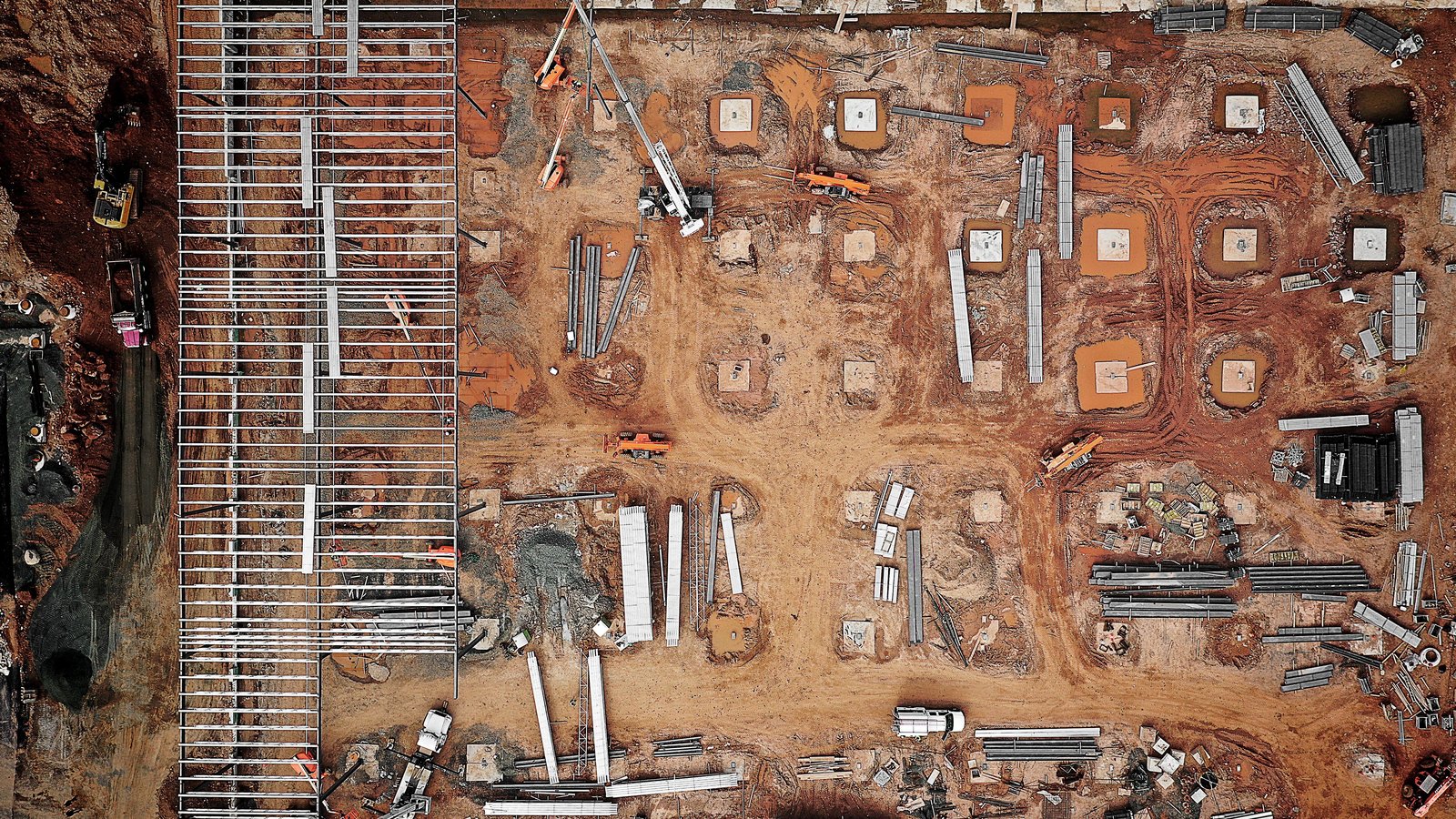
We also track structural steel and precast, even though they are not exotic, because a mill slot or a precast plate schedule can shift the whole erection sequence. Delivery plans are built around the site, including laydown, crane reach, access roads and the days the gate can accept trucks. Coordinating those with stabilized laydown yards avoids stacking material on ground that cannot carry it.
Freight reaches the site by a few corridors
Equipment arrives on large trucks, and the roads that carry them are changing. A diverging diamond interchange at Powers Boulevard and Airport Road has been under construction since June 2024 and is expected to finish in 2026, which affects delivery routing around the airport while work continues. Our knowledge of the Powers Boulevard corridor goes into every route plan for that side of the metro.
Oversize loads such as transformers and large process units need route surveys and sometimes permits, and the surveys take time. We build route review into the register, confirm clearances and construction restrictions near the site, and schedule deliveries outside peak traffic where the route allows. For projects inside the business park at Colorado Springs Airport, we also confirm gate and escort requirements with the airport before a truck is dispatched.
How we run the register
We assign each line an owner, a status and a next action, and we review the register weekly with the owner's engineers and the design team. Submittals are checked against the specification and the design loads before they go to the engineer, since a rejected submittal costs a full lead-time cycle. Where the owner prefers a particular manufacturer, we confirm lead times and plant capacity before the specification is finalized.
Early release has a cost: the owner commits money before the building is fully drawn. We handle that by releasing on preliminary scopes with defined change windows, by negotiating price holds, and by showing the owner the cost of waiting beside the cost of committing. Owners of data center and other dense power loads, who carry the longest registers, see the effect soonest.
We also keep the owner's finance team in the loop with a one-page commitment forecast showing when each purchase order will be released and what it will cost, so cash planning does not depend on the construction schedule alone. Changes to the register are logged with their cost and schedule effect.
Work that depends on early equipment decisions
Procurement management is closely tied to electrical duct bank and underground work, since routing, pit sizes and conduit counts depend on the gear selected. It also supports industrial design-build, where early equipment pricing sets the budget.
For owners who build the same facility more than once, one purchasing agreement can be reused across sites, which is the logic behind our programmatic multi-site rollouts.
Put the register on the table early
Share the equipment list or the program and the target operating date. We will return a long-lead register with release dates, approval chains and the decisions the schedule depends on.
Common Questions
Which items should be ordered before the building permit?
Anything whose lead time is longer than the remaining design and permit period. Typically that is switchgear, transformers, standby generators, cranes and large process equipment. We recommend releasing them on a preliminary scope with a defined window for changes, so a design adjustment does not mean a canceled order.
What happens if the equipment arrives before the building is ready?
We plan for it. Storage options include the manufacturer, a secured warehouse, or protected storage on site, and the choice depends on the item, the weather and your security rules. Gear that is sensitive to moisture or temperature is stored under cover, with condition checks logged until installation.
How do you protect the schedule from a rejected submittal?
We review submittals against the specification before they leave our office, schedule review periods with the engineer, and carry a buffer on each critical item. For equipment with a long approval cycle, we ask the manufacturer for a pre-submittal review so errors are caught before the clock starts.
Can we purchase some equipment directly?
Yes. Many owners furnish certain items, such as process equipment or standard electrical gear from an existing agreement. We then coordinate delivery, receiving, protection, installation and the interfaces with other trades, and we carry the owner-furnished item on the register like any other.