
Rail Spur Site Improvements in the Colorado Springs Metro
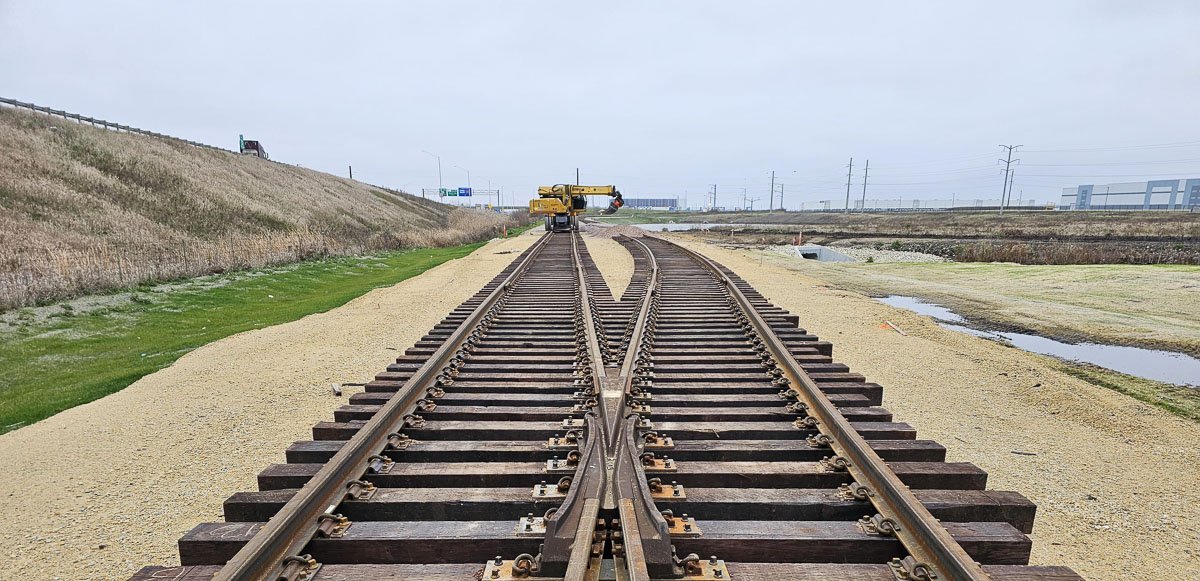
Rail changes the way a plant receives material. One loaded car replaces several trucks, and a spur that serves the site can lower inbound freight cost across a year, provided the track, the grade and the loading area are built to the standard the railroad will accept. We build the site side of rail spurs: the grading, subballast, drainage, crossings, loading pads and protection that surround the track itself.
Interest in rail-served land is visible in El Paso County. A 2018 county, city and chamber study examined a rail-served industrial park on the roughly 3,000-acre Christian Ranch just south of Fountain, with more than 2,500 acres proposed for industrial use and about 18 miles of internal track connecting to the two mainline railroads. That is the scale at which spur design becomes a shared infrastructure question, and it shows why a landowner or tenant should understand the site work before committing to a parcel. We cover the Fountain side of the market on our Fountain location page.
Track itself is installed under the railroad's standards and by approved track contractors. Our part is to deliver a formation, drainage and approach that the track crew can build on without redesign, and to coordinate the work so the operator's first car arrives on schedule.
Rail Heritage and the Lines That Remain
The Pikes Peak region grew along rail. Calhan began in 1888 as a water station for the Rock Island railroad, and its depot dates to 1906. Palmer Lake sits at the top of the Palmer Divide, where both railroads approved an engineering plan for a pedestrian bridge and where a regional trail now follows a former railway route. Rail corridors in the area are therefore a mix of active mainline, retired alignments and trail conversions.
For a buyer, that history matters in practical ways. A former corridor may be owned by a different party from the active line, a trail crossing may constrain a spur alignment, and an old grade may carry buried utilities. We confirm ownership and easements before design, and we flag any trail or utility conflict early.
Grade, Drainage and the Formation Under the Track
A spur is a long, low-speed structure that depends on its formation. The ground under the ties must be graded to a controlled profile, compacted to a stable density and drained so that water leaves the ballast section rather than collecting beneath it. Slopes of a spur are far flatter than road slopes, so drainage depends on side ditches and cross drains that are laid out with care.
Altitude and freeze-thaw cycling make drainage more important here than it would be at lower elevations. We place cross drains at low points, detail the ditches to carry spring runoff and protect the toe of the embankment from scour. Related stormwater requirements are described under our stormwater detention and drainage work.
How We Coordinate With the Railroad and the Owner
Railroads have their own review process, insurance rules and flagging requirements, and any work near active track needs their approval. We bring those requirements into the schedule from the start, request the necessary right-of-entry and flagging well ahead of mobilization and keep the owner informed about each hold point.
The sequence normally runs as follows: survey and layout, clearing, bulk earthwork, formation and subgrade proof, drainage structures, subballast, then handoff to the track contractor, followed by crossing surfaces, loading pads and fencing. We stay on the job through track installation to correct grade or drainage issues the moment they appear, and we coordinate the loading area with the dock aprons and loading zones plan so the rail loading point and the truck loading point share a consistent site grade.
Working Near Live Track
Safety rules around rail are strict and for good reason. Workers need track-specific training, flaggers must be in place near active track and equipment must be kept outside the required clearance. We prepare a site safety plan that follows the railroad's requirements and ours, brief every crew member before they enter the corridor and keep a log of each entry.
At private spurs inside a secured facility, those rules sit on top of site access control. We coordinate badge issuance and escort requirements with the owner's security lead, so crews are not delayed at the gate on the day the railroad's flagger arrives.
Services Around the Spur
A rail spur seldom serves an empty field. It usually leads to a transload area, a bulk storage pad or a warehouse with rail doors, which we may build as part of a warehouse shell program. Owners often add a heavy equipment pad for unloading cranes or conveyors, which we detail in our equipment pads and foundations work.
Industries that value rail, including metals and heavy industry and bulk-material handlers, tend to need heavier pavement approaches and fencing around the loading area.
What Drives the Cost of Site Work for a Spur
The length of the spur, the amount of earthwork to reach a track-ready grade, the number of crossings and the drainage structures required are the major drivers. A short spur on a flat, well-drained parcel costs far less per foot than a long one over variable ground, and the track, switch and signal costs belong to the railroad and its contractors, not to the site work.
We price the site package separately from the track so the owner sees where the money goes and can compare it to the freight savings that justify the spur.
Plan Rail Access for Your Parcel
Share the parcel, the commodity and the expected car volume, and we will outline the site work that rail service requires.
Common Questions
Who installs the track on a private spur?
The railroad or its approved contractor installs the track, switch and signals, and the railroad sets the standards. We prepare the formation, drainage and crossings and coordinate our schedule with the track crew. The site package and the track package are priced separately.
How long does it take to get a spur approved?
The approval timeline is controlled by the railroad and is usually measured in months rather than weeks. We start the site design in parallel, so grading and drainage are ready when the agreement is signed. Owners should begin the conversation with the railroad before land purchase is final.
Can a spur be added to an existing building?
Yes, if the site has room for the alignment, the minimum radius and the required clearances. Existing buildings often need a new rail door, a dock or a loading pad, and we assess the site for conflicts with utilities, parking and fire lanes. A site walk and survey reveal the answer quickly.
What about the trail corridors along former rail lines?
Trail and former rail alignments are common in the region, and they may be owned by a different party from the active line. We research ownership and easements before design and flag any conflict that could affect the alignment.