
Retail Shopping Center Construction in Colorado Springs
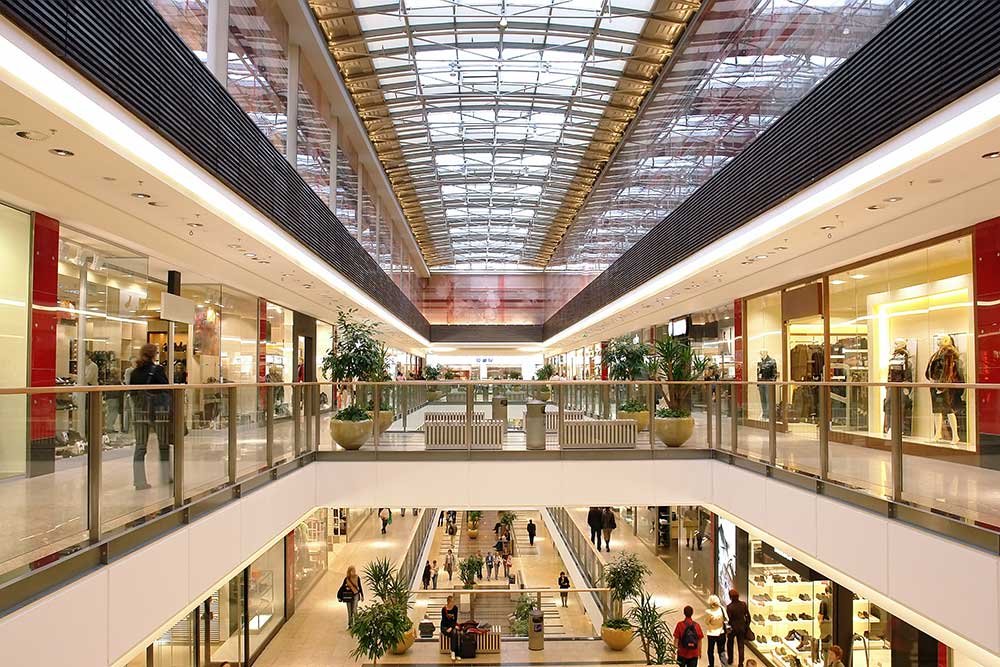
Traffic counts decide where retail goes, and interchanges decide traffic. Along Powers Boulevard the sequence of Platte Avenue (finished 2001), Woodmen Road (2008), Briargate Parkway and Union Boulevard (2012) and Old Ranch Road (2015) marks where road capacity has been built for retail traffic. We build shopping centers where that logic is visible on the plan: a main drive off the arterial, a stacked row of pads, and a shell designed to be divided as tenants sign.
Our background is industrial, so we spend our attention on the parts of a center that fail first: the paving, the underground drainage and the loading court behind the larger tenants. Along the Powers Boulevard corridor and in the commercial centers of Northgate and InterQuest, we price those pieces first.
An owner who wants a center delivered in phases, with pads sold or leased one at a time, needs a contractor who can keep the utilities, the detention basin and the access road working while buildings rise around them. That is the discipline we bring.
Where Commercial Demand Is Landing
The Pikes Peak region recorded about $3.7 billion of construction and 398 new commercial permits in 2025, so retail competes for trades and materials with a busy market. Growth has moved north and east, where InterQuest has three major commercial centers (InterQuest Commons, InterQuest Marketplace and Victory Ridge) and where an April 2019 report listed a 220,000-square-foot store among the planned projects, with current status not verified.
Downtown has a different pattern. A planned 1,200-apartment program around Weidner Field included 37,104 square feet of ground-floor retail as of May 2021, which points to small-shop space under residential floors instead of detached pads. That is the work we describe under multifamily and mixed-use, and its structure, loading and fire-separation needs are not those of a strip center.
What Moves a Shopping Center Budget
Retail costs are dominated by the site. Mass grading, detention, utility extensions, paving, curb and gutter, and lighting often exceed the cost of the shells. Where a lot sits on a slope or near a creek, retaining walls and drainage grow quickly. We price site work as its own package so you can see the effect of a decision to shift a pad or add a drive.
Shell cost then depends on the landlord and tenant split. A cold shell leaves the tenant to supply the ceiling, lighting and mechanical, while a warm shell supplies them. We define the line in writing, since mismatches between landlord work letters and tenant drawings are the most common source of change orders in a center.
Pads, Shells and Common Areas
A typical center combines a primary building with several pads. Structure is often tilt-up or masonry with steel roof framing, and canopies and storefront frames are coordinated early because they are the most visible parts. Utilities enter each pad through stubs placed during site work, so we locate them from the tenant program, not from a generic grid.
Common areas carry real scope. Stabilized parking lots must be designed for delivery trucks as well as cars, with thicker sections at truck routes and dumpster pads. Site concrete and accessibility compliance covers sidewalks, ramps and curb cuts from the accessible parking to the storefront, and we set slopes and cross-slopes carefully because failures show up as costly rework after inspection.
Managing the Site Package Closely
Earthwork, underground utilities and site concrete are the work we most closely manage on a retail job. They happen first, they set the grade for every later trade, and they are expensive to correct. Our site trade partners place pad sites to tolerance, install the storm and sanitary lines and compact the subgrade to the engineer's requirement.
When drainage is part of the approvals, our stormwater detention and drainage work gives the center a basin and outfall that meet the design, are surveyed as built and are ready for the inspector. At altitude, freeze-thaw damages poorly drained pavement fast, so subgrade drainage is part of the pavement design, not an add-on.
Access, Phasing and Open-Tenant Constraints
Entry from a state highway or a major arterial needs separate access approvals and often turn-lane construction before the center opens. State Highway 21 runs 20.245 miles as a 55 mph expressway through eastern Colorado Springs, so any driveway onto an adjoining road needs planning with the transportation authority well before breaking ground.
Phasing is the other consideration. We sequence so that the first pad can open with utilities, parking, lighting and fire access complete while later phases remain under construction behind a fence. Temporary fire lanes, detention that works at each stage and a clear construction entrance keep opening dates credible.
Centers We Build Across the Metro
We work from the north side of Colorado Springs to Fountain in the south and Monument along the I-25 corridor, where the interstate serves the town at exits 158 and 161. Each jurisdiction reviews under the 2023 Pikes Peak Regional Building Code, which carries the 2021 International Building Code, so a multi-site owner works with one code family across the metro.
For a developer weighing a retail site against a hotel or other use on the same pad, we can price the alternatives side by side, and we point owners serving online-order pickup toward ecommerce fulfillment planning when a center includes a back-of-house stock room.
Price the Site Before the Shell
Send the site plan, the tenant mix and the phasing you want. We will return a site package, a shell price and a schedule that keeps your first pad on its opening date.
Common Questions
Should I build the shell first and sell pads later?
It depends on financing and demand. Building the site package and the primary shell first gives you an operating center, while pads can follow. The risk is that later construction damages finished paving and landscaping, so we plan haul routes and protect the work already in place.
How much of a retail budget is site work?
On many centers it is the largest block, because grading, drainage, utilities and paving are required before any building can open. We provide a separate site package so you can compare sites on what must be built, not only on land price.
What affects the schedule most on a center near an interchange?
Access approvals, utility extensions and permit review. Sites near newly built junctions often depend on turn lanes or signals, and those are controlled by the transportation authority, not the owner. We start these approvals during design.
How do snow and cold affect a retail opening date?
Exterior slab work, roofing and storefront glazing all slow in cold snaps at this altitude, and snow removal competes with construction for lot space. We try to finish paving and building enclosure before winter and plan temporary parking and walkways for any phase that opens during the cold months. Tenants then install fixtures inside a heated building with lighting, power and sprinkler systems complete.
Can a center be designed to convert later?
Yes. We can leave structural bays, utility stubs and storefront frames in locations that allow a shop to be combined or divided. That flexibility is inexpensive during construction and difficult afterward.