
Industrial Renovation and Infill Construction in Downtown Colorado Springs
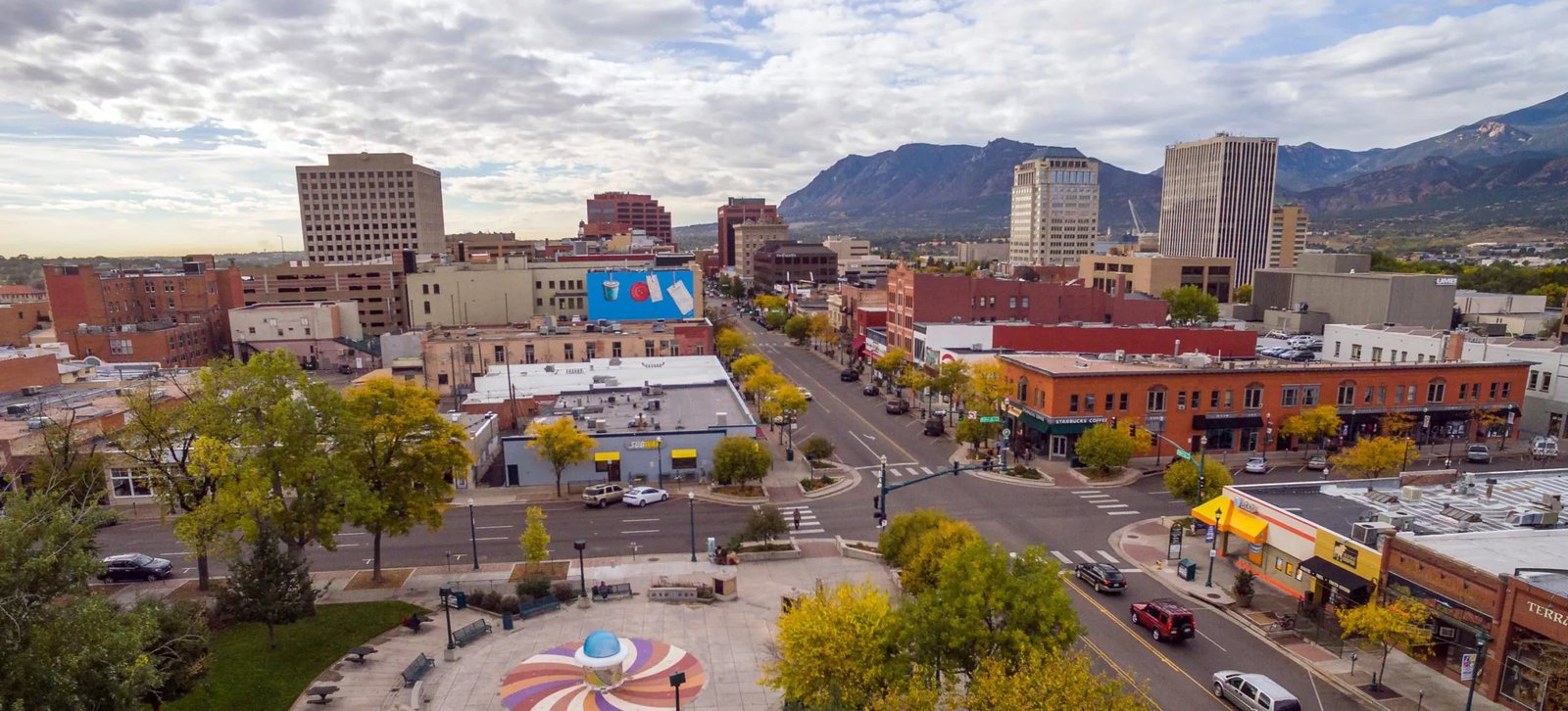
Tight sites change an industrial builder's methods, and downtown Colorado Springs is the tightest market in the metro. A lay-down area is a lane closure, a crane is a street permit and a concrete pour is a negotiation with the neighbors. We bring industrial habits to this kind of ground: detailed sequencing, closely managed structure and utilities, and a clear plan for every truck.
The work we do downtown is different from the plant and warehouse projects we build on the edge of the metro. It includes renovations of older industrial and commercial buildings, utility and structural upgrades for operating facilities, demolition and abatement ahead of new construction, and shells for service and light industrial users in the blocks around the core. The common thread is a site with neighbors on all sides.
There is reason for confidence in the market. The Downtown Partnership counted about $1.7 billion in downtown projects from 2013 to 2020, including three hotel projects, and nearly 700 apartment units were under construction in 2021. Those figures are from earlier years, so we use them as evidence of direction, not as a forecast.
Working on a Block With Neighbors on All Sides
Downtown logistics begin with the street. We obtain right-of-way permits for lane closures and hoists, schedule deliveries outside peak hours and use just-in-time ordering so that materials do not sit on the sidewalk. Cranes are positioned to avoid overhead lines and to swing clear of occupied buildings. Concrete pumps and trucks are scheduled in short windows.
Existing buildings next door also need care. We survey adjacent structures before excavation, monitor vibration during demolition and shoring, and protect party walls. Where a project requires a deep excavation, we use shoring systems that limit movement. These steps lower the risk of damage claims and keep the neighbors cooperative.
Stadium, Housing and Hospital Demand
Weidner Field, a $47 million stadium with 8,000 seats at Sahwatch and Cimarron streets on the southwest edge of downtown, hosted its first match on April 24, 2021, and about $13 million of its cost came from state sales tax funds. The apartment developer around the stadium bought nearly 11 acres and, as of May 2021, planned about 1,200 market-rate apartments over nine years at a cost of more than $400 million, with 37,104 square feet of ground-floor retail. Plans of that kind can change, and we treat them as context for demand.
The medical sector adds a different kind of demand. UCHealth Memorial Hospital Central, at 1400 East Boulder Street, is a Level I trauma center that the city leased to UCHealth for forty years in 2012, and UCHealth Memorial is the fifth-largest El Paso County employer at 6,000 workers. Hospitals and their neighbors depend on central plants, backup power, loading docks and utility corridors, which are the building blocks of our industrial practice. We discuss hospital support construction with owners who are expanding near the campus.
Hotels, restaurants and event venues create a quieter kind of demand for food and beverage support: commissary kitchens, cold rooms and delivery docks in older buildings that were never designed for them. Those are renovation jobs, and they are where our downtown project teams spend much of their time.
Renovation, Demolition and Utility Upgrades
Many downtown buildings were built long before today's loads. Our industrial renovations and modernization work begins with a structural survey, followed by repairs, strengthening and new openings. Floors that must now carry equipment may need added beams or a new topping slab, and older roofs may need to be replaced to carry new rooftop units.
When a building is beyond saving, we handle industrial demolition with selective removal, hazardous-material abatement coordinated with licensed specialists and controlled dismantling that protects the lot line. Cleared sites are then prepared for the next structure.
Public Safety Around the Work Zone
A downtown site is a public place. We install covered walkways, pedestrian detours, barriers and lighting that keep passersby safe, and we assign a flagger or traffic control crew when trucks enter or leave. Our daily housekeeping routine includes sweeping the street, picking up debris and checking that signage is intact.
Fire safety and hot work are tightly controlled. We keep fire watches during cutting and welding, protect nearby windows and vents and coordinate with the fire department when impairment of sprinklers or standpipes is needed. Neighbors receive notice before noisy or disruptive work.
What Makes Downtown Work Cost More or Less
Cost drivers include street permits and fees, limited laydown, shoring and monitoring, hand work in confined spaces and the premium for night or weekend operations. On the other hand, existing utilities are close, and a building that already has a foundation and frame can be cheaper to renovate than to replace. We provide a comparison of both options when the facts allow.
Parking is another variable. Without room for workers' vehicles, a project may need to pay for off-site parking and shuttle service. We include it in the estimate, along with the cost of keeping the sidewalk open.
How Downtown Connects to the Rest of the Metro
Interstate 25 serves downtown at exit 141 (U.S. 24 west and Cimarron Street), exit 142 (Bijou Street) and exit 143 (Uintah Street). The nearest comparable area for industrial-leaning work is the I-25 Tejon and Cimarron corridor, and the Garden of the Gods Road corridor lies to the north.
Owners who need space for equipment storage, fabrication or distribution often pair a small downtown presence with a larger building in the Colorado Springs metro. We can build both under a single contract and schedule.
Tell Us About the Block
Send the address, the building age and the scope. We will survey the constraints and return a method, a schedule and a range for renovation or new construction.
Common Questions
How do you handle deliveries on a tight downtown site?
We schedule them in short windows, ideally outside peak traffic, and we use just-in-time ordering. Lane or sidewalk closures require a city permit, and we apply for them early. For large items such as steel, we arrange an off-site staging area and bring pieces to the site as they are erected.
Is renovating an older building cheaper than building new?
Sometimes. A sound frame and foundation save money, but hidden conditions can offset the savings. We carry out a survey and sample testing, then provide a range for each option so owners can decide with real numbers.
What can be done about noise and vibration?
We choose quieter methods when we can, such as saw cutting in place of hammering, and we schedule noisy tasks for agreed hours. Vibration monitors on adjacent structures record the effect of demolition and excavation, and the record is shared with the owner.
Can you phase work around an operating business?
Yes, and it is a core skill. See our work on phased construction on occupied sites. We build temporary partitions, relocate services and schedule shutdowns at times that suit the operation.
Does downtown have industrial demand at all?
It has service, repair and supply demand, tied to hospitals, hotels, housing and events. The industrial component is smaller and more specialized than at the edge of the metro, which is why the projects are usually renovations and upgrades rather than large shells.