
Automotive and Fleet Facilities in Colorado Springs
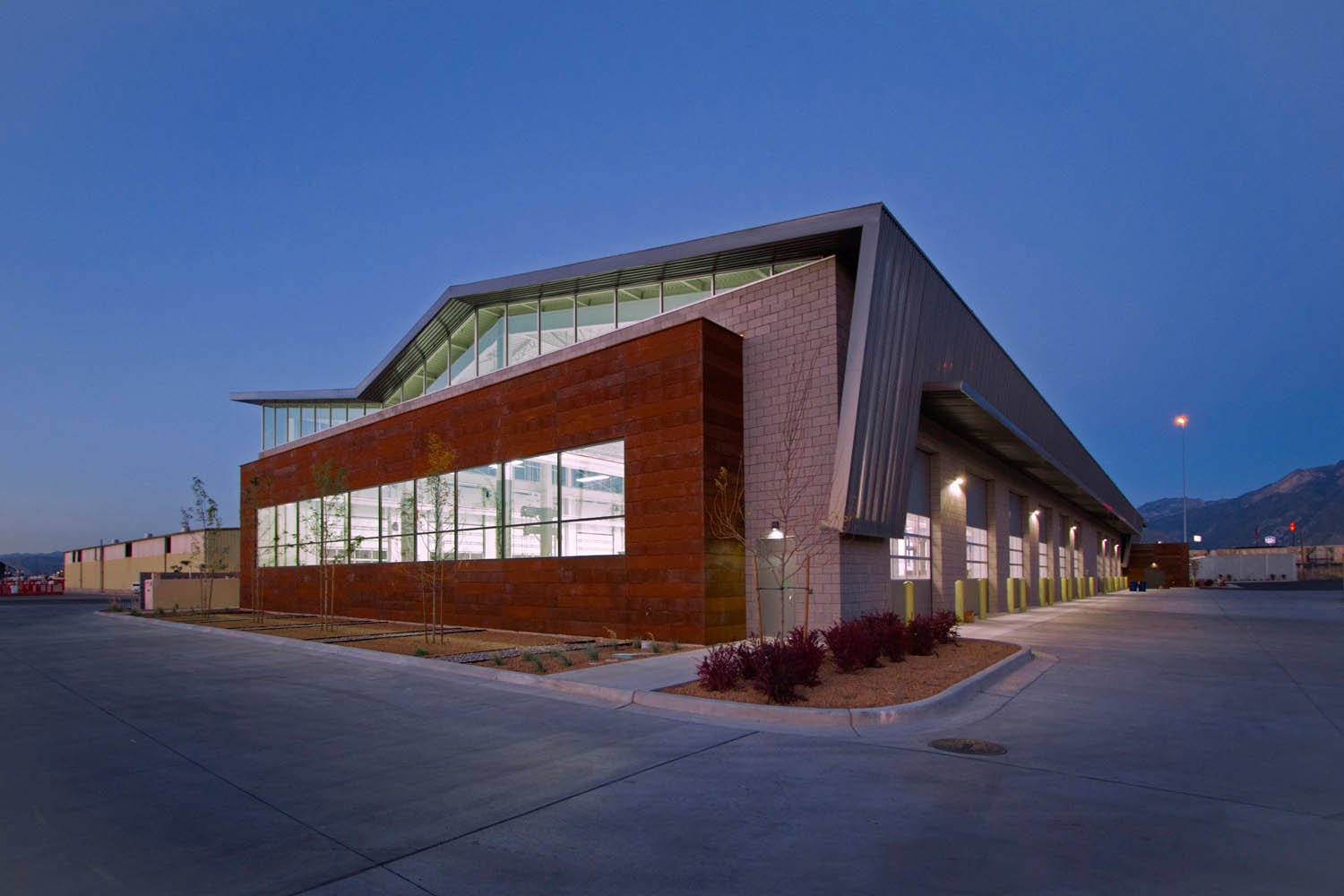
Fleet buildings are judged by how many vehicles they return to service on a given morning. A yard that floods, a bay door that is eight inches too low for the newest truck, a wash rack that sends oily water to the storm drain, a charger bank that trips the main breaker: each of these costs the operator days of vehicle availability. We build fleet facilities for owners who run service vans, delivery trucks, municipal and utility equipment, and mixed commercial vehicles, and we design them around that availability.
The facility is made of several parts that must be coordinated. A maintenance building holds the service bays, parts room, tire storage and offices. Outside are the parking yard, the fueling area, the wash bay, a vehicle inspection pad and the fencing and lighting that secure the lot. Underneath is the drainage and the electrical infrastructure that serves them. A fleet manager sees one facility, and a contractor must see the same.
We write our scope in terms of vehicle classes, turning radii, wheel loads and daily movements. Those numbers determine pavement thickness, door sizes, bay spacing and queuing room, and they are the basis of a sound estimate.
Fleet Routes and Where Facilities Locate
State Highway 21, Powers Boulevard, is a 20.245-mile expressway running from Fountain to the north side of Colorado Springs and bypassing the airport; it is a 55 mph expressway through eastern Colorado Springs and a 65 mph semi-freeway north of Dublin Boulevard. For a fleet operator that means a continuous route across the east side that does not depend on downtown streets. Our Powers Boulevard corridor page describes the business district along it.
Sand Creek is a key tributary of Fountain Creek, and the southeast side of the city drains toward it, with Platte Avenue crossing the creek near the Powers interchange. Fleet yards in that area face floodplain and drainage questions that parcels elsewhere avoid, and we discuss them in our page on Sand Creek and southeast Colorado Springs and in stormwater detention and drainage.
The Parts of a Fleet Facility
The service building is a clear-span structure, usually with 14 to 18 feet of door height, floor drains, trench drains, lifts or in-ground pits, and compressed-air and lubricant distribution. Ventilation is sized for exhaust from running engines, and heating is designed for the cold-weather door cycle. A parts room, tool crib and offices form the rest of the plan. See maintenance shops and service bays for the details of the building itself.
The yard includes heavy-duty pavement for parked vehicles, designed for wheel loads that exceed those of an ordinary lot, with striping, wheel stops and lighting. Fueling uses a canopy, a containment slab and tanks with leak detection. The wash bay has a sloped slab, a sump, and an oil-water separator before discharge. Where vehicles are charged, we install the conduit, pads and service capacity for the chargers.
Pavement, Concrete and Drainage Under One Plan
The ground work is where fleet facilities succeed or fail, and it is work we manage most closely. We grade and compact the yard, install the aggregate base and place the concrete or asphalt that carries turning, braking and standing loads. Concrete pads at fuel islands and wash bays are reinforced and jointed to resist chemical and mechanical wear.
Drainage is built to the design: inlets, pipes, separators and detention if required. We check slopes with a level before the surface goes down, because a puddle on a yard becomes a freeze-thaw crack in winter. For lots that serve trucks, our truck courts and trailer yards experience applies directly.
Charging, Fuel and Stormwater
Electrification is now part of most fleet planning. HB22-1362 requires an electric and solar ready code to be adopted alongside the energy code whenever a county or municipality updates its building code on or after July 1, 2023, and from July 1, 2026 the state low energy and carbon code becomes the benchmark. For a fleet owner, the practical effect is that new buildings should include conduit paths and panel capacity for chargers. Installing a conduit in a new slab is cheap, and cutting a trench through a finished yard is not.
Fuel and wash facilities are regulated for spills and discharge. A containment slab, a spill kit and a separator are standard, and the discharge must be authorized by the sanitary utility. Stormwater from the yard may need treatment before it leaves the site. We raise these items in the first meeting with the owner's environmental staff, since they affect site layout. Owners in the automotive and EV sector will recognize most of them.
Metro Locations for Fleet Yards
Fleet operators choose sites near their routes. Fort Carson is the largest employer in El Paso County, at 36,000 workers according to the county's 2022 annual financial report, and the vehicles and contractors that serve a post of that scale shape demand across the south side of the city. Suburban areas like Security-Widefield, an unincorporated community of 38,639 residents, put a large resident population within reach of service vans, which makes yards near Interstate 25 useful to the fleets that cover them.
We build across the metro, from the south side near Fort Carson to the north side and along the expressway. In unincorporated El Paso County, the same 2023 Pikes Peak Regional Building Code applies as in the city, so a fleet with yards in several jurisdictions can use consistent design assumptions.
Give Us the Fleet List
Send us the vehicle classes, the number of vehicles, the services you perform in-house and the parcel. We will return a site plan, a building concept and a price. Contact us to schedule a site visit.
Common Questions
How tall should service bay doors be?
Tall enough for the highest vehicle with rooftop equipment you expect over the life of the building, plus clearance for the door track. Many fleets have been caught by new vehicles that exceed the door. We ask for the maximum vehicle height and add margin. Raising a door after the structure is built is expensive.
Do we need an oil-water separator for a wash bay?
In most cases, yes. The sanitary utility regulates discharge from wash water, and a separator, sampling point and sump are the usual means of compliance. The details depend on the utility's rules and the type of washing. We confirm the requirement before design is complete.
Can we prepare for chargers without buying them now?
Yes. The common approach is to install conduit, pads and a panel with spare capacity, and add chargers later. This lets the owner phase equipment purchases with vehicle replacements. The utility must confirm the available service, and we help to request it.
What pavement is best for a heavy vehicle yard?
Concrete resists the point loads of parked trucks and the chemical attack of fuel and fluids, and asphalt is less expensive to install and easier to patch. Many yards use concrete at fueling, wash and parking areas and asphalt for the circulation lanes. The geotechnical report and the wheel loads determine the section.
Does the yard need to be fenced and lit?
Most fleet owners fence and light their yards for security and insurance. We coordinate the work with the lighting design and the access control system, and we place conduit before paving. Our fencing and security work is covered on our fencing and security integration page.